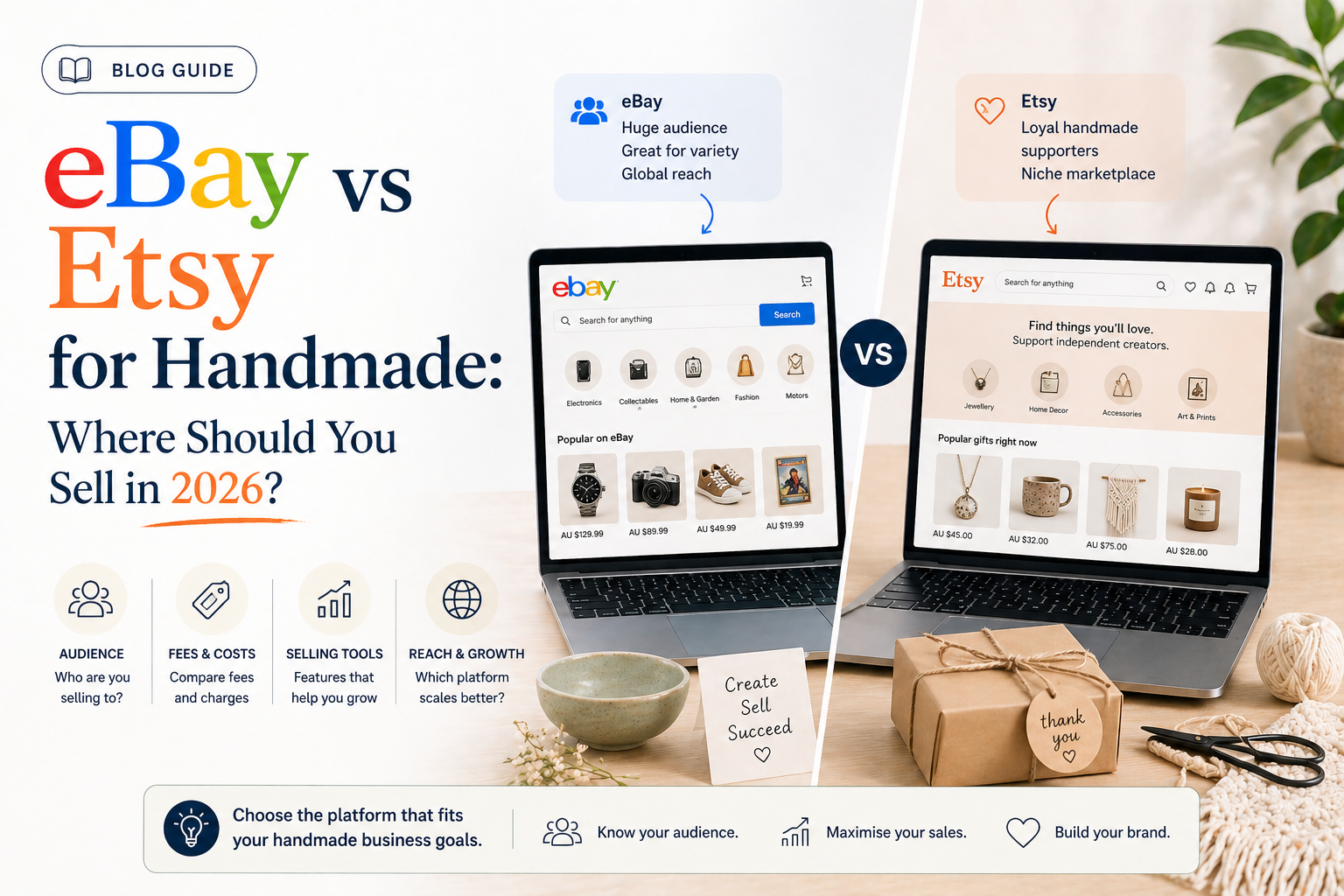

If you make things by hand and want to sell them online, eBay and Etsy are the two obvious choices. Etsy was built for handmade and vintage goods, while eBay is a general marketplace with a massive audience. The right choice depends on what you make and who you’re trying to reach.
Fees at a Glance
- Etsy: $0.20 USD listing fee per item + 6.5% transaction fee + payment processing (3% + $0.25). Listings last 4 months then auto-renew ($0.20 each time).
- eBay: Up to 250 free listings/month, then $0.35 per listing. ~13.25% final value fee (varies by category) + payment processing.
Etsy’s per-listing fee means it costs money just to have items listed, even if they don’t sell. eBay’s free tier is generous for smaller sellers, but the final value fee is higher. For handmade items with higher price points, Etsy often works out cheaper overall. For lower-priced items in volume, eBay’s free listings help.
Jewellery
Etsy dominates the handmade jewellery market. Buyers specifically come to Etsy looking for unique, artisan-made pieces. Whether you’re making silver rings, beaded necklaces, or resin earrings, Etsy’s audience expects and values handmade.
eBay has a huge jewellery category, but it’s mostly commercial and branded pieces. Handmade jewellery listings get buried among mass-produced items from overseas sellers. Unless you’re selling at very competitive prices, it’s hard to stand out.
Verdict: Etsy, by a wide margin. Jewellery is one of Etsy’s top-performing categories for handmade sellers.
Clothing
Handmade clothing is a growing category on Etsy, particularly for custom-made pieces, baby clothes, knitwear, and screen-printed tees. Etsy buyers understand that handmade clothing costs more than fast fashion and are willing to pay for it.
eBay’s clothing category is enormous but price-sensitive. Buyers tend to search by brand, not by “handmade.” If you make custom band tees, tie-dye, or screenprinted designs, eBay can work because buyers search for those specific terms. But for bespoke garments, Etsy’s audience is more receptive.
Verdict: Etsy for bespoke and custom pieces. eBay can work for printed/branded designs where buyers search by keyword.
Accessories
Bags, belts, wallets, hair accessories, phone cases. Etsy has a strong market for handmade accessories, especially leather goods and personalised items (monogrammed wallets, custom phone cases). The personalisation angle is a huge draw on Etsy.
eBay is competitive for accessories because it’s heavily price-driven. If you can produce handmade accessories at a price point that competes with manufactured goods, eBay’s volume can work. But most handmade sellers can’t compete on price, so Etsy’s value-conscious audience is a better match.
Verdict: Etsy, especially if you offer personalisation or custom options.
Home Decor
This is where eBay becomes more competitive. Handmade candles, pottery, wall art, and woodwork sell on both platforms, but eBay’s larger audience means more eyeballs on your listings.
Etsy is still strong for home decor with a handmade or artisan angle. Ceramic planters, macrame wall hangings, and hand-poured candles all do well. But eBay’s home and garden category is massive, and buyers there are comfortable paying for quality pieces.
Verdict: Both work well. Etsy for artisan/boutique positioning, eBay for volume and broader reach.
Art
Original art and prints are an interesting case. Etsy has a dedicated art market with buyers who specifically seek out original pieces, prints, and illustrations from independent artists. Prices tend to be higher and buyers understand the value of original work.
eBay has an art category too, but it’s a mixed bag of prints, reproductions, and originals. Serious art buyers tend to go to Etsy or dedicated art platforms. That said, eBay’s auction format can work well for one-of-a-kind pieces where competitive bidding drives the price up.
Verdict: Etsy for prints and illustrations. eBay for one-of-a-kind pieces where auction format could drive higher prices.
The Overall Picture
For most handmade sellers, Etsy is the better starting point. The audience is primed for handmade goods, the platform is built around artisan sellers, and buyers expect (and accept) handmade pricing.
eBay makes sense as a second channel, especially for home decor, art auctions, and products where keyword search drives discovery. Running both platforms simultaneously gives you the best of both worlds.